Exploring the Role of Isometric City Map Environmental in Modern Urban Visualization
Understanding Isometric City Map Environmental
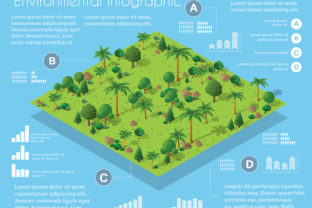
The Isometric City Map Environmental has emerged as a powerful tool for representing urban landscapes in a visually engaging and informative manner. Unlike traditional two-dimensional maps, this style leverages isometric projection to create a three-dimensional effect, allowing viewers to grasp spatial relationships more intuitively. It combines architectural elements, transportation systems, and environmental indicators into a cohesive visual narrative that supports data-driven decision-making and public communication.
At its core, the Isometric City Map Environmental infographic set includes scalable vector graphics that depict buildings, roads, parks, waterways, and public infrastructure from a consistent 30-degree angle. This uniformity ensures clarity and aesthetic harmony, making it ideal for reports, dashboards, presentations, and educational materials related to urban planning, sustainability, and smart city development.
Key Components of the Isometric City Map Environmental Infographic Set
The infographic set is designed to be modular and adaptable, allowing users to mix and match elements based on their specific needs. Some of the most common components include:
- Transport icons: Representing buses, trains, bicycles, and electric vehicles, these elements help illustrate mobility patterns and infrastructure development.
- Architectural graphics: Residential towers, commercial buildings, and green structures convey density, zoning, and sustainability efforts.
- Environmental indicators: Trees, solar panels, wind turbines, and water bodies highlight ecological features and climate resilience initiatives.
- Statistical overlays: Charts, graphs, and percentage-based visuals can be integrated to show population growth, pollution levels, or energy consumption.
- Urban planning symbols: Pedestrian zones, bike lanes, and smart traffic lights support visual storytelling around modern city design.
These components are often delivered as layered vector files, enabling customization in terms of color, scale, and layout. This flexibility makes the Isometric City Map Environmental suitable for both print and digital media, including web infographics, mobile applications, and interactive dashboards.
Applications Across Industries and Disciplines
One of the most compelling aspects of the Isometric City Map Environmental infographic set is its versatility. It finds relevance across multiple domains, each with unique visualization needs:
- Urban Planning and Municipal Governance: City officials and planners use these maps to communicate development plans, zoning changes, and infrastructure investments to the public and stakeholders. The visual clarity helps reduce confusion and fosters community engagement.
- Environmental Research and Sustainability Reporting: Researchers and NGOs incorporate these visuals to show the impact of urbanization on ecosystems, track green initiatives, and advocate for climate action.
- Corporate and Real Estate Development: Developers use isometric maps to present future projects to investors and buyers, highlighting amenities, transportation links, and green spaces in an appealing format.
- Education and Public Awareness Campaigns: Teachers and communicators use these maps to explain urban geography, environmental science, and civic planning to students and general audiences.
- Digital Platforms and Smart City Dashboards: Web designers and data visualization experts integrate isometric maps into responsive UIs that track real-time metrics like air quality, traffic congestion, and energy usage.
Each of these applications benefits from the Isometric City Map Environmental's ability to simplify complex data while maintaining visual appeal and informational depth.
Advantages Over Traditional Mapping Techniques
Compared to standard two-dimensional maps or satellite imagery, isometric city maps offer several distinct advantages:
- Enhanced Spatial Understanding: The angled perspective provides a sense of depth and dimensionality, making it easier to visualize how different parts of the city connect and function together.
- Improved Data Integration: By combining icons, charts, and text within a single visual framework, these maps allow for layered storytelling that traditional maps often lack.
- Better Accessibility: Users without technical training in cartography or GIS can quickly interpret the information presented, broadening the audience reach.
- Greater Design Flexibility: Designers can adjust colors, labels, and elements to match branding guidelines or specific thematic focuses, such as sustainability or economic development.
- Scalability and Reusability: Because the elements are modular, they can be reused across different projects, saving time and ensuring consistency in visual communication.
These advantages make the Isometric City Map Environmental infographic set a preferred choice for modern data visualization, especially in contexts where clarity, engagement, and aesthetics are equally important.
Best Practices for Using Isometric City Map Environmental in Visual Communication
To get the most out of the Isometric City Map Environmental, it’s important to follow certain design and communication best practices:
- Define the Purpose Clearly: Whether it’s for a policy brief, a marketing brochure, or a public dashboard, knowing the goal will guide the selection and arrangement of visual elements.
- Balance Detail and Simplicity: While it's tempting to include every possible data point, overloading the map can confuse the audience. Focus on the most relevant information.
- Use Consistent Visual Language: Ensure that all icons, fonts, and color schemes align with the overall theme and branding of the project.
- Incorporate Data Sources Transparently: If statistical charts or diagrams are included, cite the data sources clearly to build credibility and trust.
- Optimize for Different Formats: Consider how the map will be used—whether in print, on a website, or in a presentation—and adjust resolution, file type, and interactivity accordingly.
- Test for Readability: Share drafts with a diverse group of users to ensure the visual is easy to understand and conveys the intended message effectively.
By applying these principles, creators can ensure that their use of the Isometric City Map Environmental infographic set delivers both visual impact and meaningful insight.
Future Trends and Innovations
As cities continue to grow and evolve, so too do the tools used to visualize and understand them. The Isometric City Map Environmental is likely to see several advancements in the coming years, driven by improvements in data integration, design software, and user interactivity.
One emerging trend is the incorporation of real-time data feeds into isometric maps, allowing for live updates on traffic, pollution levels, and energy consumption. This would enable city managers and citizens to monitor urban conditions dynamically.
Another area of growth is the integration with augmented reality (AR) and virtual reality (VR) platforms. Imagine walking through a virtual isometric city map that highlights environmental metrics as you explore—this could revolutionize how people interact with urban data.
Additionally, the use of AI-assisted design tools is streamlining the creation process, allowing even non-designers to generate professional-grade isometric visuals quickly and efficiently. This democratization of design will likely expand the reach and impact of the Isometric City Map Environmental infographic set.
Conclusion
The Isometric City Map Environmental represents a convergence of design, data, and urban storytelling. Whether used for policy analysis, public education, or business communication, it provides a compelling way to represent the complexity of modern cities in a visually accessible format. As technology and design practices continue to evolve, this tool will remain a valuable asset for anyone seeking to understand and shape the future of urban environments.